

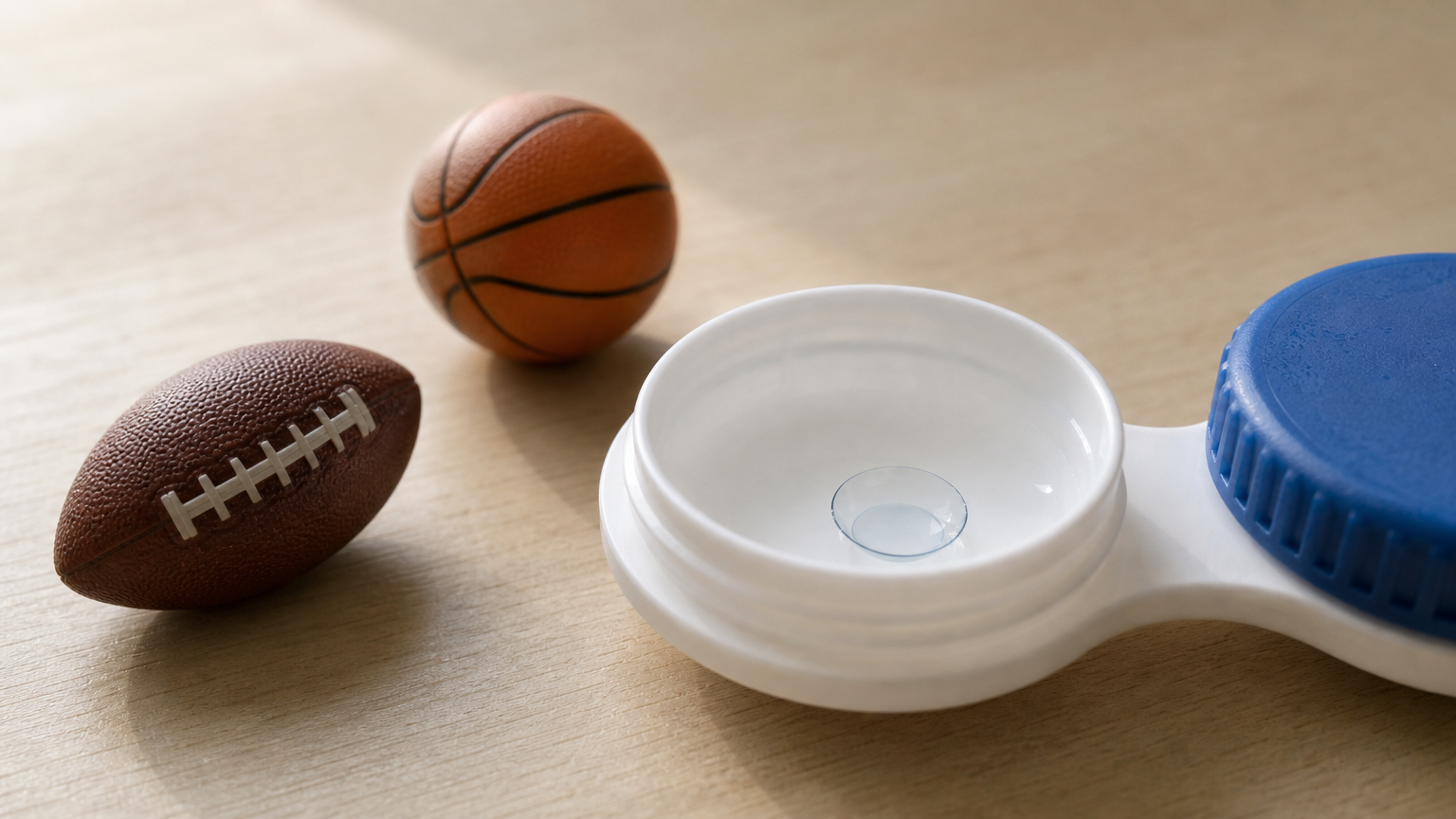
Yes, you can wear contacts with astigmatism. The question can you wear contacts for astigmatism has a simple answer: most people can, as long as the lens is built for it. Astigmatism means your cornea or lens is shaped more like a football than a basketball, so light focuses at several points instead of one. Contacts made to correct it are called toric lenses, and a systematic review of astigmatism studies estimates that about 40% of adults worldwide have it, so they are a routine option.
This guide covers why astigmatism does not block contact lens wear and how to get fitted and order the right lens. It also compares the lens types (soft toric, rigid gas-permeable, hybrid and scleral) and explains how well each one works, including where wearers struggle.
ContactLensDirect sells toric lenses from Acuvue, Alcon, Bausch + Lomb and CooperVision, so this guide is written for people ready to move from questions to a prescription and a reorder. Only your eye doctor can diagnose astigmatism and choose your lens, so use this article to prepare for that conversation.
Why astigmatism doesn't rule out contacts
Can you wear contacts for astigmatism? Yes, because lenses exist that correct it directly. A toric lens has a different power in different directions and is built to stay at the right angle on your eye.
How toric lenses correct astigmatism
A standard lens has the same power in every direction. A toric lens has different optical powers in different meridians. That matches the uneven curve of your cornea and brings light back to a single point on the retina.
Because the power changes with direction, the lens must not spin. Makers add stabilization zones, such as thicker areas or shapes that work with your eyelids, to hold the lens in place. Acuvue Oasys for Astigmatism, for example, uses four zones that work with the natural blink. If a lens rotates, vision blurs until it settles back, so a good fit matters as much as the right power.
When regular lenses fall short
Regular lenses correct nearsightedness or farsightedness but carry no power for astigmatism. People with very low astigmatism, typically under about 0.75 diopters, sometimes see well enough in standard spherical lenses. Beyond that, expect blurry or doubled vision, eye strain and headaches. Your doctor decides where that line falls for you.
The reverse is a mistake too. A toric lens put on an eye without astigmatism adds cylinder power that distorts vision, so wear only what you are prescribed. Also, contacts do not reshape your cornea. They correct vision only while you wear them. Only surgery such as LASIK changes the shape, and that is a separate conversation with a surgeon.
A toric lens corrects astigmatism only while it sits at the right angle, so stability matters as much as power.
How to get fitted and order lenses for astigmatism
You can wear contacts for astigmatism once you have a contact lens fitting, a prescription with specific toric values, and an order that matches that prescription exactly. A glasses prescription alone is not enough.
The fitting steps
Here is how a typical fitting goes:
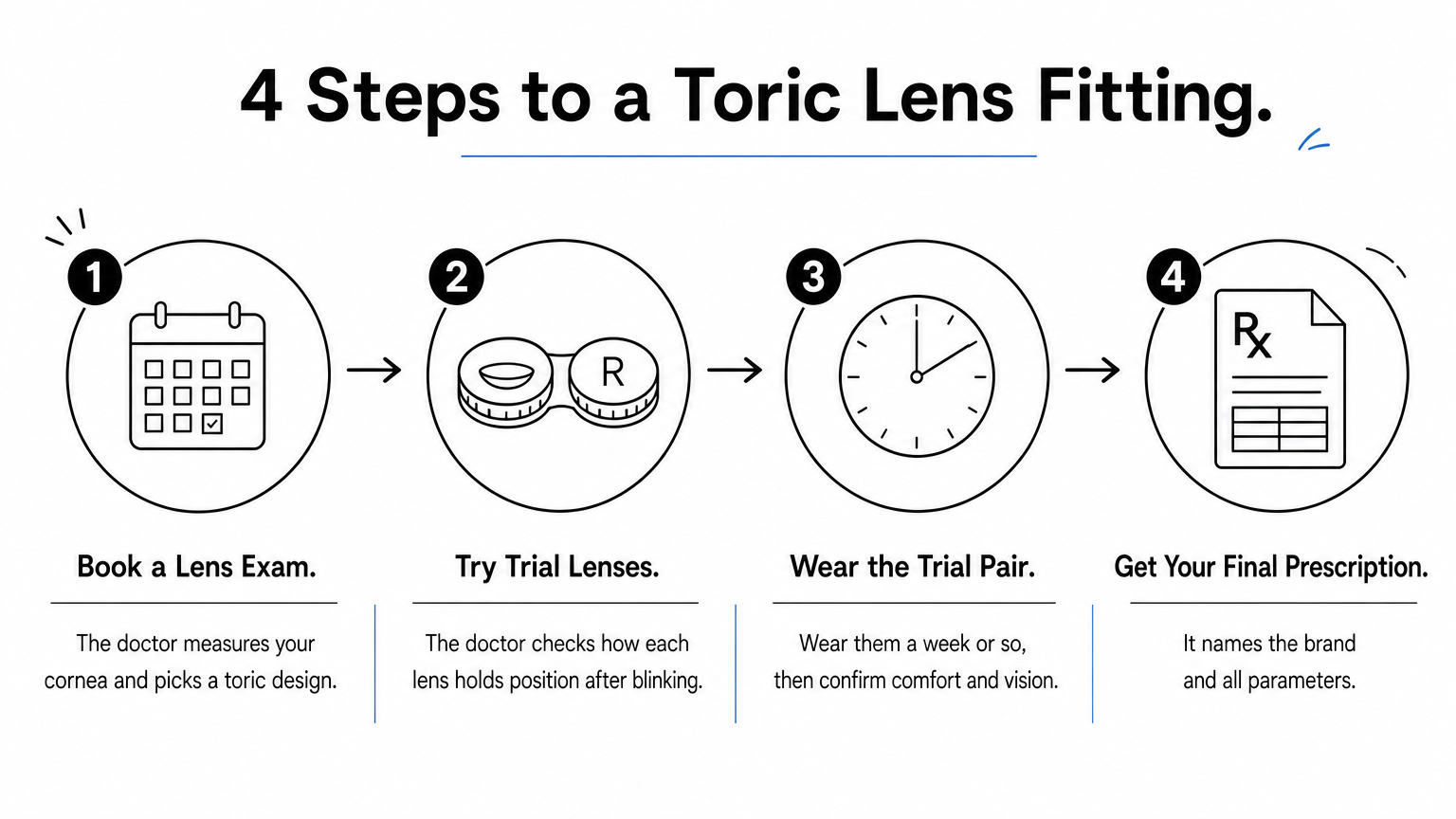
- Book a contact lens exam. The doctor measures your cornea and astigmatism, then picks a toric lens design.
- Try the trial lenses. The doctor checks how well each lens holds its position after you blink.
- Wear the trial pair for a week or so. Many doctors schedule a follow-up to confirm comfort and clear vision.
- Leave with a final contact lens prescription that names the brand and all parameters.
Expect a tweak or two. Adjusting the axis or switching brands is common with toric lenses and does not mean contacts are failing you.
What your toric prescription says
Your prescription lists more than the numbers on a glasses prescription:
| Term | What it means |
|---|---|
| SPH (sphere) | Power for nearsightedness or farsightedness |
| CYL (cylinder) | Strength of your astigmatism correction |
| AXIS | The angle, from 1 to 180 degrees, where the cylinder power sits |
| Base curve and diameter | The lens curve and size that fit your eye |
| Brand | The exact lens you were fitted with |
Order the exact brand and every parameter, because a different brand can fit and rotate differently. At ContactLensDirect, a valid prescription is required for every order. The in-house team verifies it, contacting your eye doctor where needed, and orders ship within about 5 business days of verification. Some toric lenses are custom orders that dispatch 2 to 4 weeks after the prescription is confirmed, so reorder before you run low.
Match the brand, power, cylinder and axis on your prescription exactly, because toric lenses are not interchangeable.
Which contact lenses correct astigmatism
If you can wear contacts for astigmatism, you have four lens types to choose from, and soft toric lenses are the first choice for most people. The others are for higher or irregular astigmatism, or for eyes that do not do well in soft lenses.
Four lens types compared
| Lens type | Best for | Main trade-off |
|---|---|---|
| Soft toric | Most wearers, from mild to fairly high astigmatism | Vision can vary at higher levels, and rotation is possible |
| Rigid gas-permeable (RGP) | Higher astigmatism, or when you want the sharpest optics | Longest adjustment period |
| Hybrid | Wearers who want RGP clarity with softer comfort | More complex fitting |
| Scleral | Rare cases, such as high or irregular astigmatism | Larger lens, more handling |
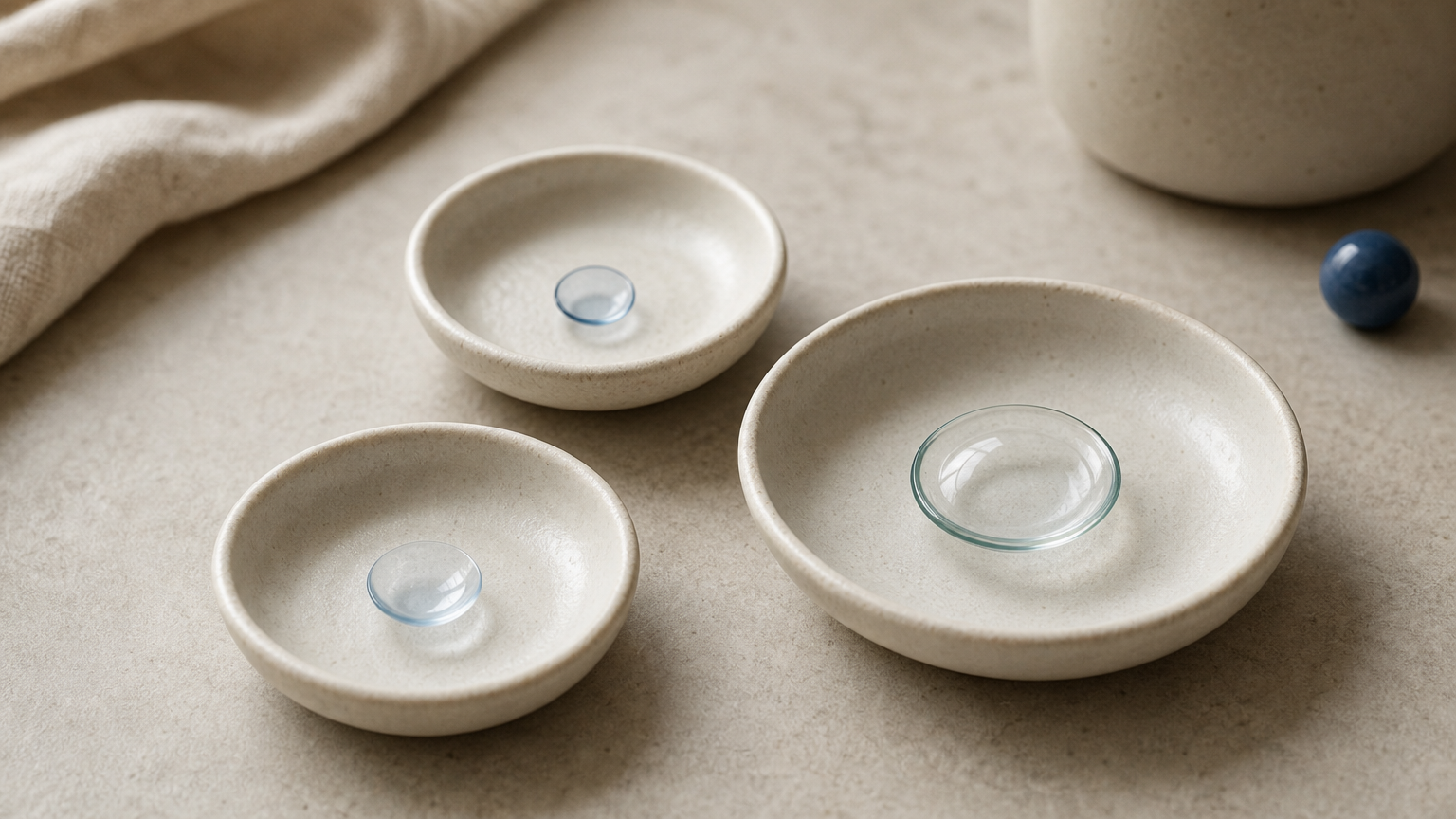
Soft toric lenses dominate because they are comfortable and come in every wear schedule. RGP lenses keep their shape on the eye and can give crisper vision. Hybrids pair a rigid center with a soft skirt. Scleral lenses rest on the white of the eye and vault over the cornea, with the space under the lens filled with fluid before insertion.
Daily, 2-week or monthly toric lenses
Soft toric lenses come as daily disposables, 2-week lenses and monthly lenses. Here is what a year of each costs at current ContactLensDirect prices, using one lens per eye, per replacement period, before shipping:
| Schedule | Example lens | Pack price | Boxes per year | Approx. yearly cost |
|---|---|---|---|---|
| Monthly | Biofinity Toric, 6 pack | $42.50 | 4 | $170.00 |
| 2-week | Acuvue Oasys for Astigmatism, 6 pack | $49.80 | 9 | $448.20 |
| Daily | Dailies AquaComfort Plus Toric, 90 pack | $88.90 | 8 | $711.20 |
The monthly example covers 12 pairs, which is exactly a year. The 2-week example covers 27 pairs, a few more than the 26 you need. Eight 90-packs cover about 360 days. Monthly lenses cost least but need nightly cleaning and a fresh case. Dailies cost the most but remove the care routine and give you a fresh lens each morning.
Choose your wear schedule by how much cleaning you will actually do, not just by price.
How well contacts work for astigmatism
Can you wear contacts for astigmatism and see clearly? For most people, yes, though results depend on your fit, your astigmatism level and your lens type. Expect clear vision once the lens is stable, and some trade-offs.
Vision quality and rotation
Soft toric lenses correct many levels of astigmatism, but at higher levels vision quality may vary. Rotation is the usual cause. When a lens turns a few degrees, vision blurs until it realigns. Newer stabilization designs reduce this, and trying a different brand often fixes it.
Compared with glasses, contacts cover the whole cornea, so you get no gaps at the edges of your view. Glasses can be made to your exact values, while contacts come in set steps, so the doctor picks the closest fit. Many people wear both, with contacts for sports and glasses for evenings.
Comfort and the adjustment period
If astigmatism contacts feel uncomfortable, the cause is often fit, dryness or a lens that does not suit your eye. Toric lenses have stabilizing zones you may notice for the first days. Rigid lenses take the longest to get used to.
Do not give up after a rough week. Ask your doctor about a different material, brand or wear schedule. Persistent redness, pain or sudden vision changes mean you should remove the lens and call your eye doctor.
Special cases
- Presbyopia: Multifocal toric lenses correct astigmatism and near vision together. Monovision is another option your doctor may discuss.
- Nearsightedness or farsightedness: One toric lens corrects them alongside astigmatism.
- Colored contacts: These are possible with your doctor's approval, but your correction may limit the shades available.
- Who may not qualify: An active eye infection, severe dry eye or certain corneal conditions can rule out contacts for now. Your doctor makes that call.
For most people with astigmatism, a properly fitted soft toric lens gives clear vision, and persistent problems usually point to fit, not failure.
Getting started with contacts for astigmatism
Astigmatism does not keep you out of contacts. Soft toric lenses suit most people, and rigid, hybrid and scleral lenses cover higher or irregular cases. What decides your results is the fitting, so get one and order exactly what the prescription names.
If your eye doctor has already prescribed an Acuvue 2-week lens, you can browse Acuvue Oasys 2-week lenses with HYDRACLEAR PLUS. Match the brand, power, cylinder and axis on your prescription, and the team verifies it before anything ships.


